Statement by Yair Davidy
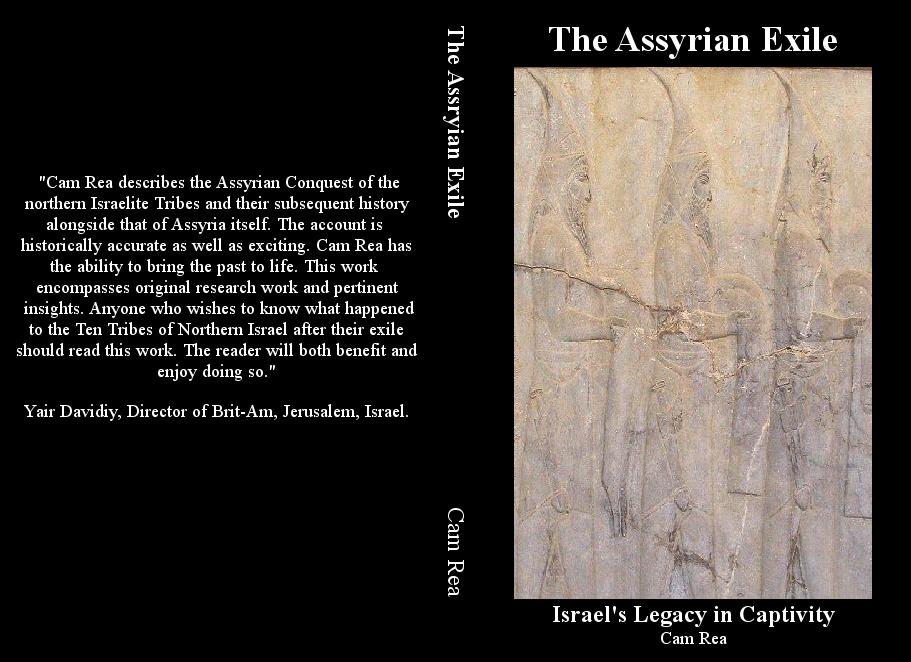
What happened to the northern Ten Tribes of Israel once they were taken into captivity by the Assyrians? That is just what Kendallville, Indiana resident and student of Indiana-Purdue University of Fort Wayne, Cam Rea addresses. In his first book 'The Assyrian Exile: Israel's Legacy in Captivity', set to be released by www.wordclay.com, Cam Rea researches into where the Israelites were taken, who they were during the exile, and what happened to them during the decline and after the fall of Assyria. Brit-Am director Yair Davidiy had this to say about the book:
“Cam Rea describes the Assyrian Conquest of the Northern Israelite Tribes and their subsequent history alongside that of Assyria itself. The account is historically accurate as well as exciting. Cam Rea has the ability to bring the past to life. This work encompasses original research work and pertinent insights. Anyone who wishes to know what happened to the Ten Tribes of Northern Israel after their exile should read this work. The reader will both benefit and enjoy doing so.
If you would like more information on this topic visit www.britam.org, or to schedule an interview with Cam Rea, call Cam at 1-260-582-9735 or email him at israels_tribes@yahoo.com
Yair Davidiy
POB 595
Jerusalem 91004
Israel
Author, World expert on The Lost Ten Tribes of Israel
Table of Contents
- Introduction 6
- Rebirth of Assyria 7
- Assyrian aggression 8
- PUL? 10
- Assyrian Expansion 12
- Western union the best way to get paid 15
- Damascus 22
- To the Coast! 24
- Quick bit 25
- Event Horizon! 27
- No Battles? 32
- Hoshea, the last King of Israel 34
- Deportation and Relocation 45
- Who were the Medes? 49
- Settling in 52
- Slavery 55
- Could the Israelites bare arms? 55
- Could the Israelites master the horse? 57
- Names 60
- Who are the Cimmerians? 64
- Who were the Ishkuza? 68
- The role of Hosea 70
- Location of the Cimmerians 71
- Invasion of Urartu 78
- Phrygia, Assyria, and the Cimmerian Rebellion 80
- Sennacherib 85
- Esarhaddon, Cimmerians, and the New Threat 90
- Kastariti 103
- Esarhaddon's Palace 118
- Conclusion to Esarhaddon 119
- Ashurbanipal and the revealing 121
- Dugdammi, King of the World 127
- Madya 144
- Cyaxares and the Scythians 145
- The Decline of Assyria 149
- Nabopolassar 152
- Josiah and Psammetichus 153
- Arise, go to Nineveh, that great city 160
- The Fall of Nineveh Chronicle 167
- Aftermath 172
- Final Thoughts 177
Approbation by Yair Davidiy, Director of Brit-Am, Jerusalem, Israel
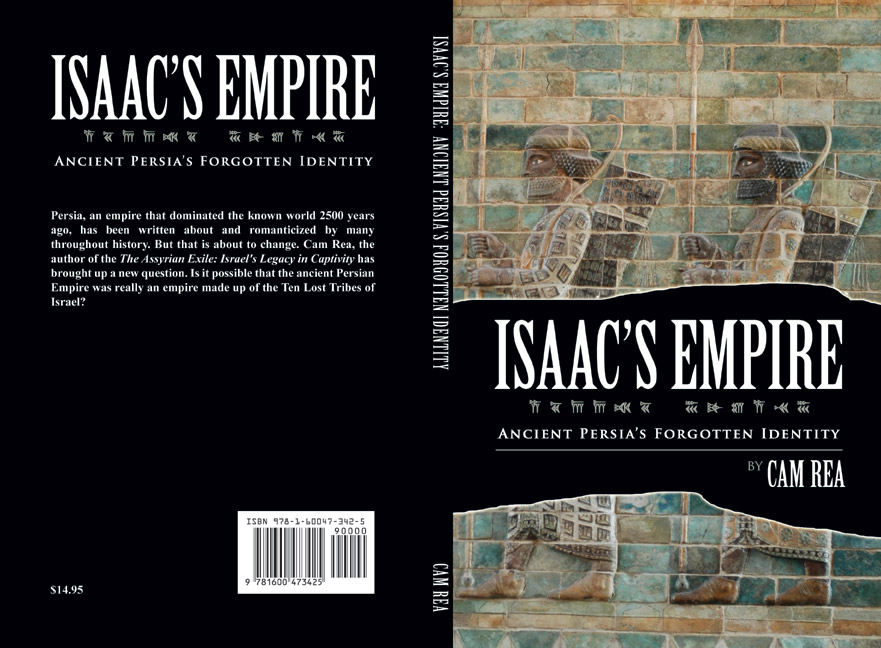
Cam Rea has written "Isaac's Empire. Ancient Persia's Forgotten Identity". We have corresponded with Cam for quite some time and benefited from his insights and instinctive appreciation of historical reality.
In our work, "The Tribes. The Israelite Origins of Western Peoples" (1993, 2004) we traced exiled Israelite Tribes to groups amongst the Cimmerians and Scythians as well as to other entities within the Median and Persian domain. We noticed Scythian and other groups in areas where traditions related the Lost Ten Tribes were to be found.
The Bible itself says that the Israelites were re-settled in the Cities of the Medes (2-Kings 17:6). Entities int he said areas in several cases had names that confirmed their Israelites origins: The Pasargadie have a name meaning "Sons of Gad", the Dangali meaning Dan of the Galilee, the Iskiguli meaning the Exiled of Isaac, the Asarkati for Issachar, and so on. Cam Rea has taken these identifications a step further, added others of his own. He has found evidence of Israelite origins in the names of Persian tribes, rulers, and officials. No-one is saying that the Ancient Persians were Hebrews. On the contrary. What is being said is that in the area at that time were important Israelite groups. Later the Israelites moved out of the region going to the north and westward. They have little or no relation to the present-day Iranians and only a tenuous one with the bulk of the Ancient Persians.
We do not necessarily agree with Cam Rea on every point but we still recommend his work. Cam Rea writes very well. He has done valid research. His observations are all worth considering. In the course of his narrative he gives an outline of the historical background of great value. The majority of the Israelites were exiled. They were taken into northern regions of the Assyrian Realm which area later became the Persian-Median Empire. Israelites were there. This is an important subject. It is worth knowing about. Cam Rea has prepared a work that prepares the reader towards a study of this matter and its historical background. Yair Davidiy, Director of Brit-Am, Jerusalem, Israel".
ContentsApprobationbyYairDavidiy IX
- Introduction 1
- TheAssyrianExileAShortIntroduction 3
- KingsoftheUmmanManda 6
- Cyaxares 6
- Astyages 12
- TheEarlyPersianKings 17
- Achaemenes 17
- TeispesofAnshan 19
- CyrusIofAnshan 23
- CambysesIofAnshan 25
- CyrustheGreat 27
- ThearmiesofCyrustheGreat 29
- CyrusandtheWest 34
- Cyrus’EasternandBabylonianCampaigns 36
- CyrusFreestheJews! 40
- Slavery 44
- Cyrus’LastCampaign 45
- TheGeneralsofCyrus 47
- CambysesII 50
- DariustheGreat 54
- Rebellion 56
- ThetermSakainPersianuse 61
- Kinversekin 65
- Darius’sGenealogy 67
- Death,Wives,andchildrenofDarius 73
- Xerxes,ArtaxeresI,II,andSogdianus 74
- AverdictontheMedio-Persiankings 75
- AncientPersiaandtheSakaPeople 76
- Darius’BehistunInscription 76
- Satrap,aShortIntroduction 81
- IsraelfoundinthePersianprovinces 82
- Persia 82
- Media 85
- Armenia 87
- Makrones 88
- Cappadocia 88
- Parthia 89
- Hyrcania 90
- Drangiana 91
- Aria 92
- Chorasmia 93
- Bactria 94
- Sogdiana 95
- Gandhara 96
- Saka 97
- Sattagydia 99
- Arachosia 99
- Makran 99
- Margiana 100
- AverdictontheMedio-PersianprovincialIdentity 102
- Conclusion 104
- Endnotes 106
- Bibliography 118
- Index 128